Intelligence as a Service: A New Approach to Business Intelligence Production

How AI agents are changing how organizations produce and consume business intelligence
What Traditional BI Was not Designed to Do
Business intelligence has evolved from paper reports to sophisticated dashboards and automated reporting systems. These tools excel at one thing: consistently delivering the same KPIs and visualizations on schedule. This consistency is both their strength and their fundamental limitation.
Traditional BI dashboards visualize data so humans can decode it. They show the same metrics, the same charts, the same structure every time, regardless of what is actually happening in the data. When something unusual occurs, when edge cases emerge, when the story changes, the dashboard stays the same. Humans must discover these anomalies, interpret their significance, and figure out what to do about them.
Creating these systems requires a chain of specialized roles: backend developers make data available from databases, frontend developers transform it into visualizations, and both need technical skill combined with storytelling ability. If data is not in the database, you will not see it. If the backend developer has not exposed it, you will not see it. If the frontend developer has not created the right aggregation, you will not see it. And when everything is perfectly built, humans still need to interpret the visualizations to extract intelligence.
When something changes (new competitors emerge, market dynamics shift, different questions become important), this entire chain must be repeated.
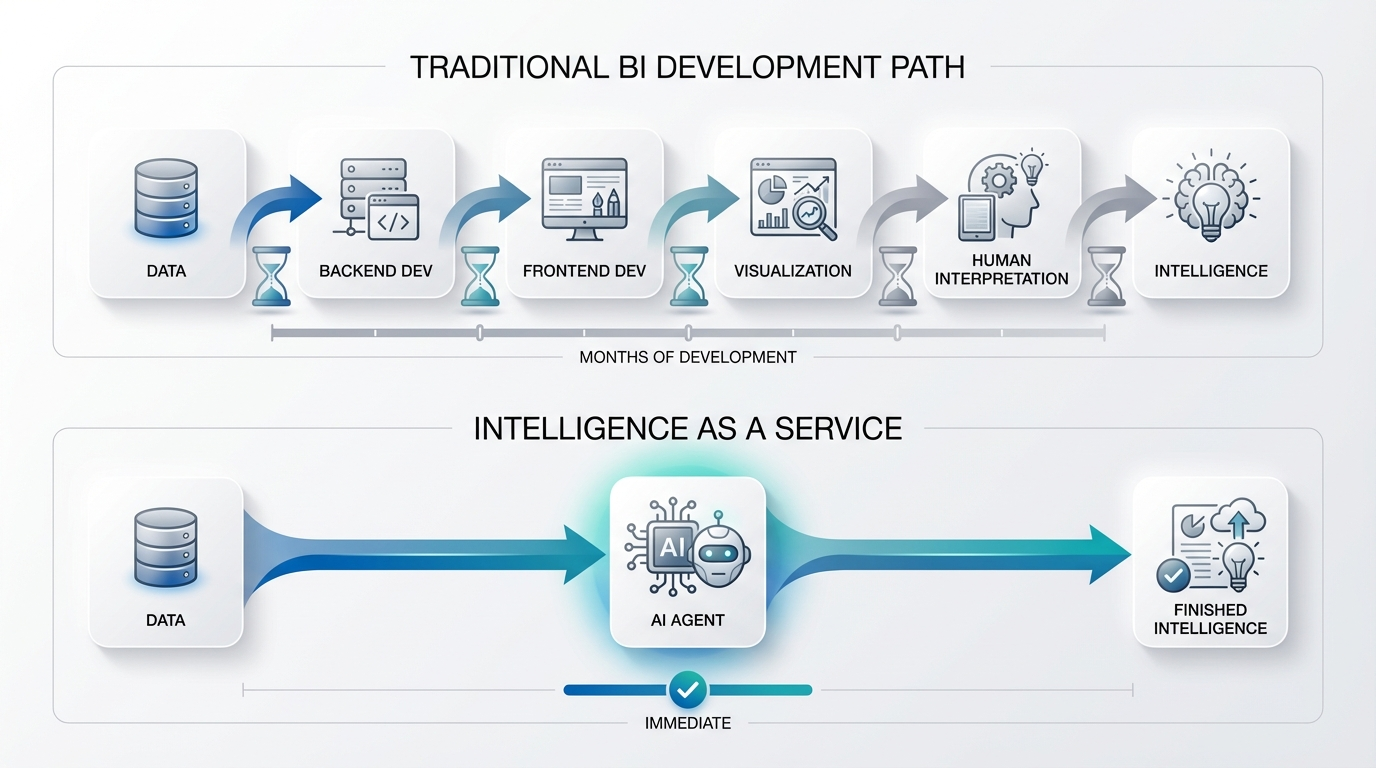
What if you could get the intelligence you need without competing for scarce internal resources? What if new intelligence requirements did not sit in development backlogs for months, or never get built at all? What if the report adapted automatically when your questions changed?
That is what Intelligence as a Service offers. The development work, data integration, and ongoing adaptation happen externally. You subscribe to finished intelligence delivered on schedule.
Intelligence as a Service: The Model
Intelligence as a Service uses autonomous AI agents to execute complete intelligence workflows, from data collection through analysis to finished output. AI agents handle the entire process: connect to data sources, analyze what matters, synthesize insights, produce finished intelligence, and deliver on schedule. Humans consume the intelligence and make strategic decisions.
Why This Works Now
Advanced AI models: Language models capable of reasoning, analysis, and synthesis, not just text generation.
Agentic workflows: Systems where AI agents execute multi-step processes autonomously, handle errors, and validate outputs without human intervention.
Direct data access: Technologies like Model Context Protocol enable AI to query databases directly with structured precision, eliminating the need for custom integration work for each data source.
Structured methodology: Approaches that ensure AI produces consistent, professional-grade output rather than generic summaries.
At iQ Global, we have developed our Intelligence-as-a-Service framework over three years, focusing on domain industry intelligence needs. The system is operational and ready for production deployment.
What Makes This Different
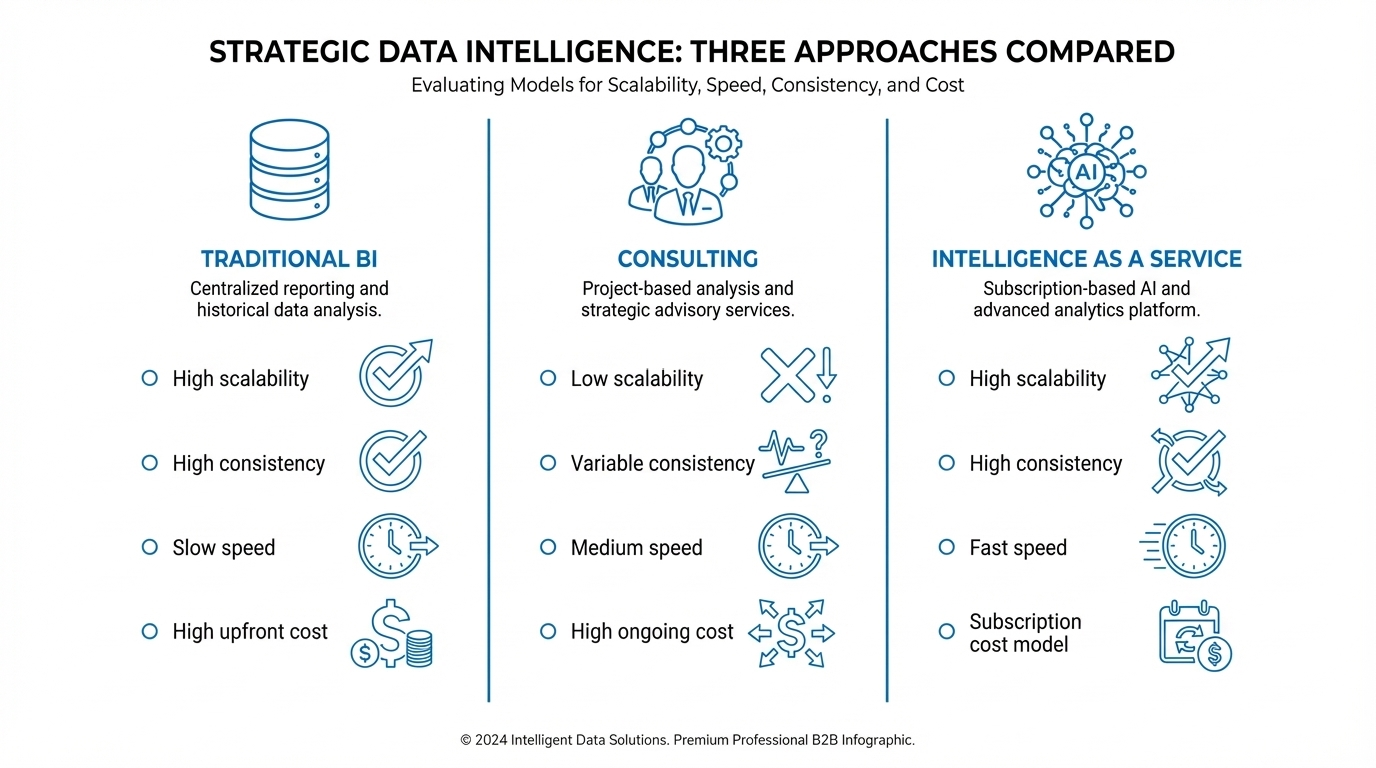
You might ask: how is this different from BI tools, consulting firms, or AI-enhanced analytics?
The key distinction is not about output format. Intelligence as a Service can deliver to dashboards, emails, APIs, whatever you need. The distinction is how the intelligence is produced.
Traditional BI (tools and platforms):
- Intelligence produced by deterministic code
- SQL queries, aggregations, calculations defined upfront
- Given the same input data, produces exactly the same output
- Logic is fixed: Show me revenue by region, orders by product
- When market changes, code must be rewritten
- AI features (if present) are additions to deterministic logic
Consulting and Agencies:
- Intelligence produced by human analysts
- Ad-hoc analysis: approach varies by analyst and project
- Does not scale. More intelligence requires more people, quality varies by analyst
Intelligence as a Service:
- Intelligence produced by AI agents reasoning about what matters
- Agents analyze significance: What is important in this data right now?
- Adaptive analysis: The same sales data might highlight regional growth in Q1 but flag churn patterns in Q2. The AI decides what is significant based on current context
- Logic is adaptive: What matters this week? not Show me metric X
- When market changes, AI adapts its analysis automatically
- Systematic methodology ensures consistent quality at scale
The core difference: deterministic logic vs. intelligent reasoning. Traditional BI executes fixed code. Intelligence as a Service uses AI agents that analyze, reason, and adapt. Intelligent reasoning all the way down to the data layer.
And delivery flexibility: Intelligence as a Service can update your dashboards if you want. But why force people to log in with usernames and passwords when you can deliver beautifully formatted intelligence directly via email, Slack, API, or wherever they need it? Traditional BI cannot do this. You cannot have deterministic code create truly adaptive reports delivered any way you want. With Intelligence as a Service, the intelligence you need arrives on a silver platter, in the format you prefer.
Our First Application: iQ Market Intelligence
We have built iQ Market Intelligence as our first production application of this framework: weekly competitive intelligence for domain industry organizations.
Organizations will be able to subscribe to customized competitive intelligence delivered on schedule:
- Registries monitoring TLD portfolios: Performance analysis, registrar campaign tracking
- Multi-market registrars: Competitive positioning across markets, campaign activity, pricing changes
- Industry participants: Pricing trends, market analysis, competitive dynamics
Each organization receives intelligence tailored to their needs, in their preferred format, on their chosen schedule.
Framework Validation
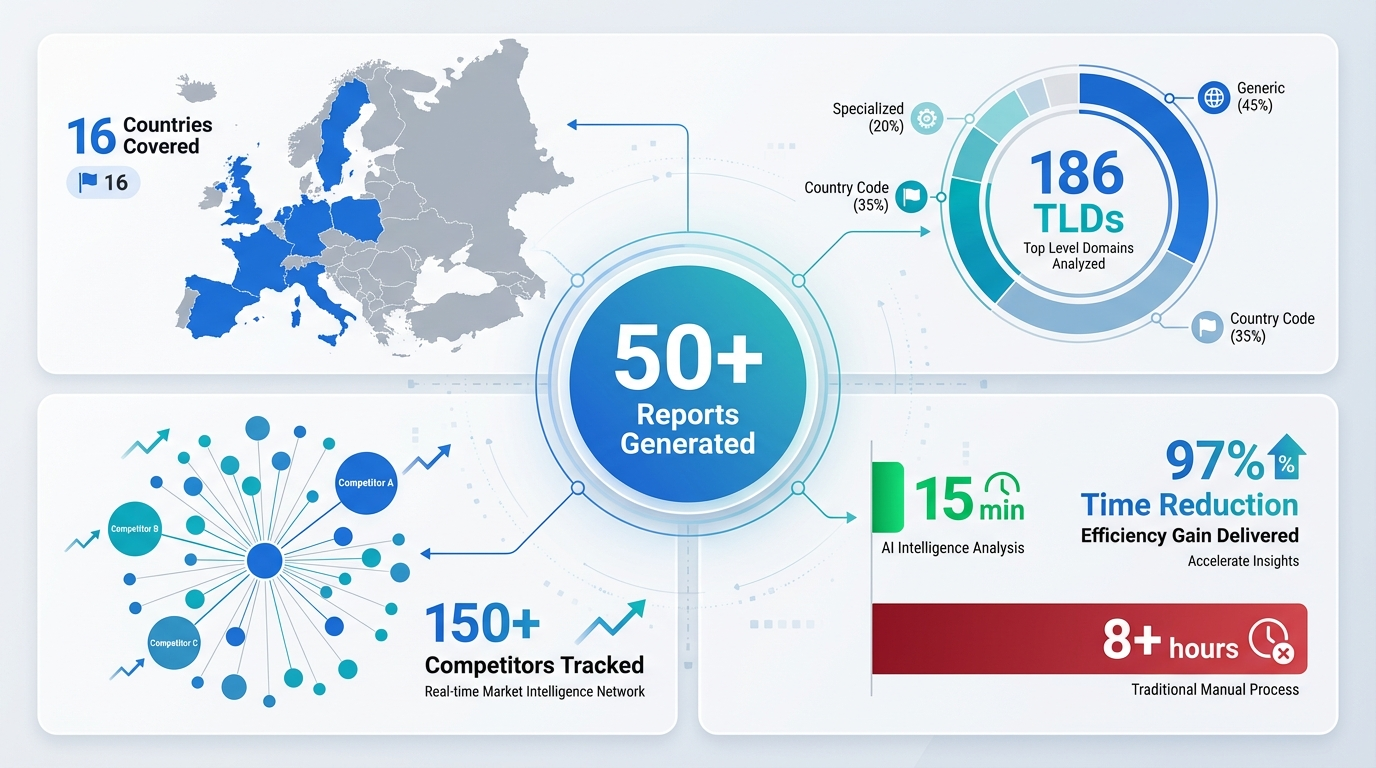
During development, we have generated 50+ intelligence reports to validate the framework produces reliable, professional-grade intelligence.
Proven capabilities:
- 16 European markets: France, Germany, UK, Spain, Italy, Netherlands, Belgium, and others
- 150+ competitors tracked: Major registrars across all markets
- 186 TLDs monitored: Comprehensive competitive landscape
- 15 minutes per market: Compared to 8+ hours for manual analysis
What this demonstrates:
Framework viability: AI agents can produce professional-grade intelligence autonomously, proven across 50+ development reports with consistent quality.
Economic model: Time savings (15 minutes vs. 8+ hours per market) makes Intelligence as a Service economically viable for organizations needing regular competitive intelligence.
Quality consistency: Structured methodology produces reliable output across diverse intelligence needs.
External data integration: The framework successfully connects to web data sources without requiring client-side integration work.
We are preparing to launch with pilot customers who will help us refine the service for broader availability.
The Technical Foundation
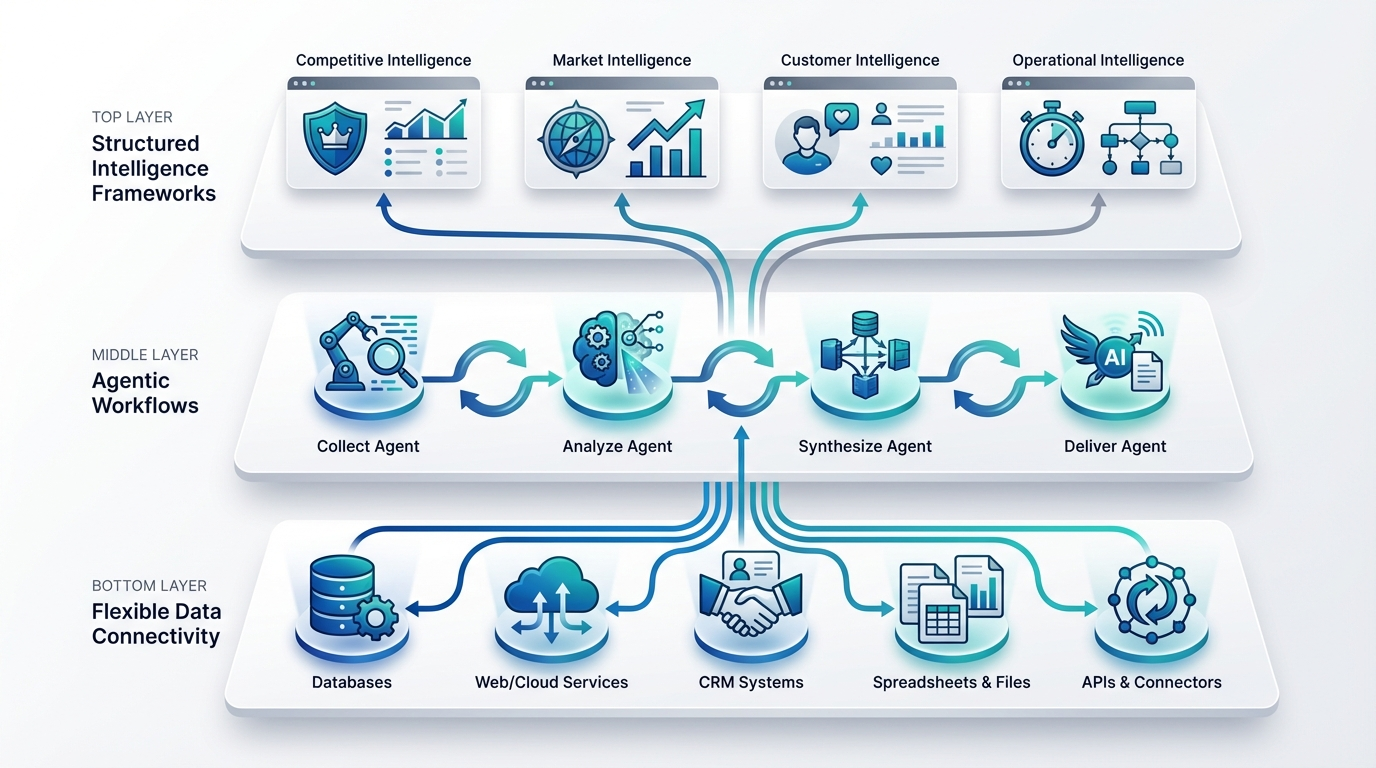
Our Intelligence-as-a-Service framework has three core components:
1. Agentic Workflows
Multi-agent systems that autonomously execute complete processes: connect to data sources, query relevant data, analyze patterns, cross-reference external sources, synthesize insights, format output, deliver to recipients. Built-in error handling ensures reliability. Quality validation checks ensure outputs meet standards before delivery.
2. Structured Intelligence Frameworks
We have developed specific frameworks for different intelligence types (competitive, market, customer, operational). Each framework:
- Defines what data matters for that intelligence type
- Structures how AI analyzes that data
- Ensures domain expertise is applied consistently
- Produces professional-grade output rather than generic summaries
For domain industry intelligence, our frameworks understand TLD pricing dynamics, campaign structures, registrar/registry relationships, and market-specific behaviors. This domain knowledge is embedded in how the AI processes information.
3. Flexible Data Connectivity
The framework connects to various sources: databases (SQL, NoSQL), APIs (REST, GraphQL), web scraping, transaction logs, CRM systems, spreadsheets. Technologies like Model Context Protocol enable direct database querying without custom integration work for each source.
Critically, the framework can access external data sources (competitor websites, market data, industry reports) that would not be available in internal dashboards.
Beyond Market Intelligence
We are planning additional domain industry intelligence applications:
Campaign Intelligence: Real-time campaign monitoring with performance alerts and optimization recommendations.
Customer Intelligence: Churn prediction, renewal optimization, expansion opportunity identification.
Portfolio Intelligence: TLD performance analysis and market opportunity assessment.
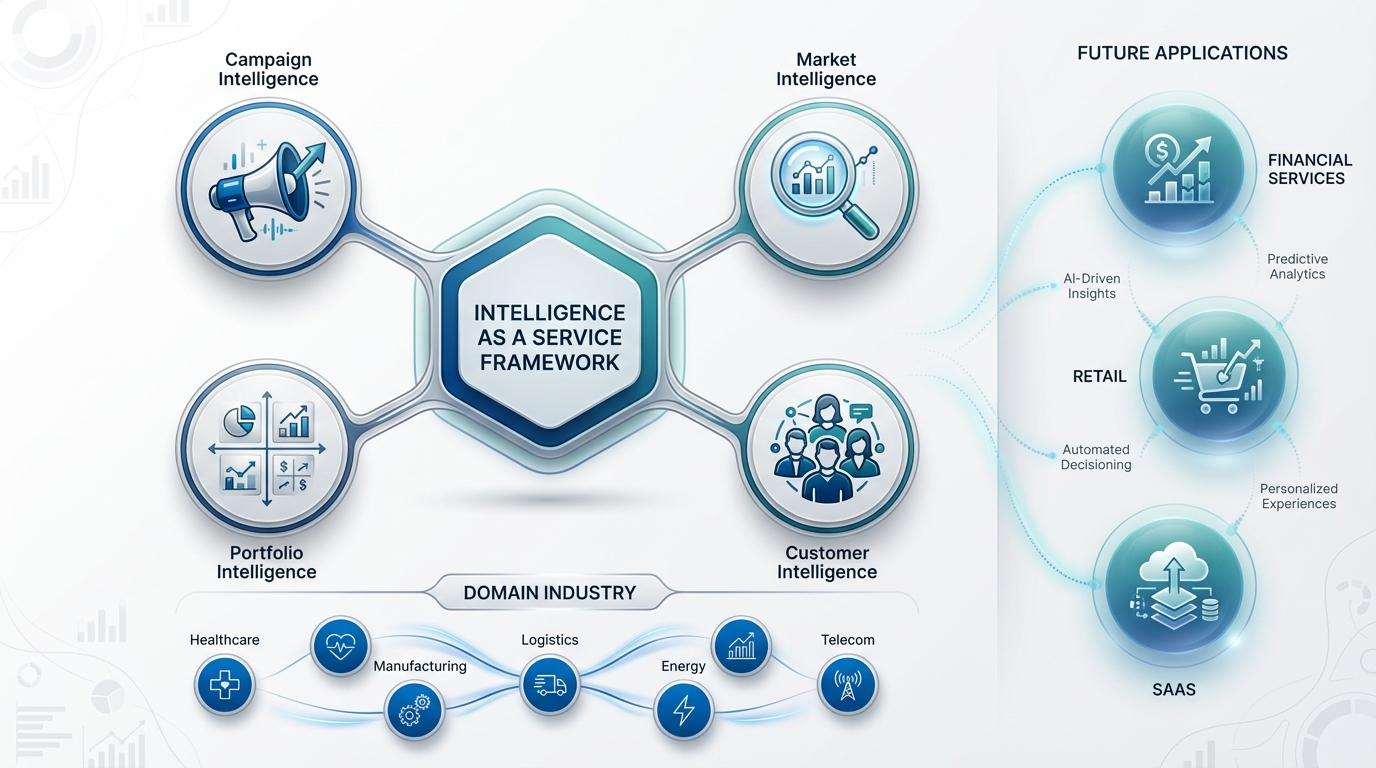
The same framework, different intelligence types. We are also exploring applications in financial services and retail contexts to validate the universal design.
Where This Goes
Conversational Intelligence
One evolution we are exploring: conversational intelligence. Imagine receiving your weekly report, noticing something interesting, and asking: Why did competitor X pricing change in Germany? The system analyzes the question and responds with a bespoke report specific to that inquiry, without waiting for the next development cycle.
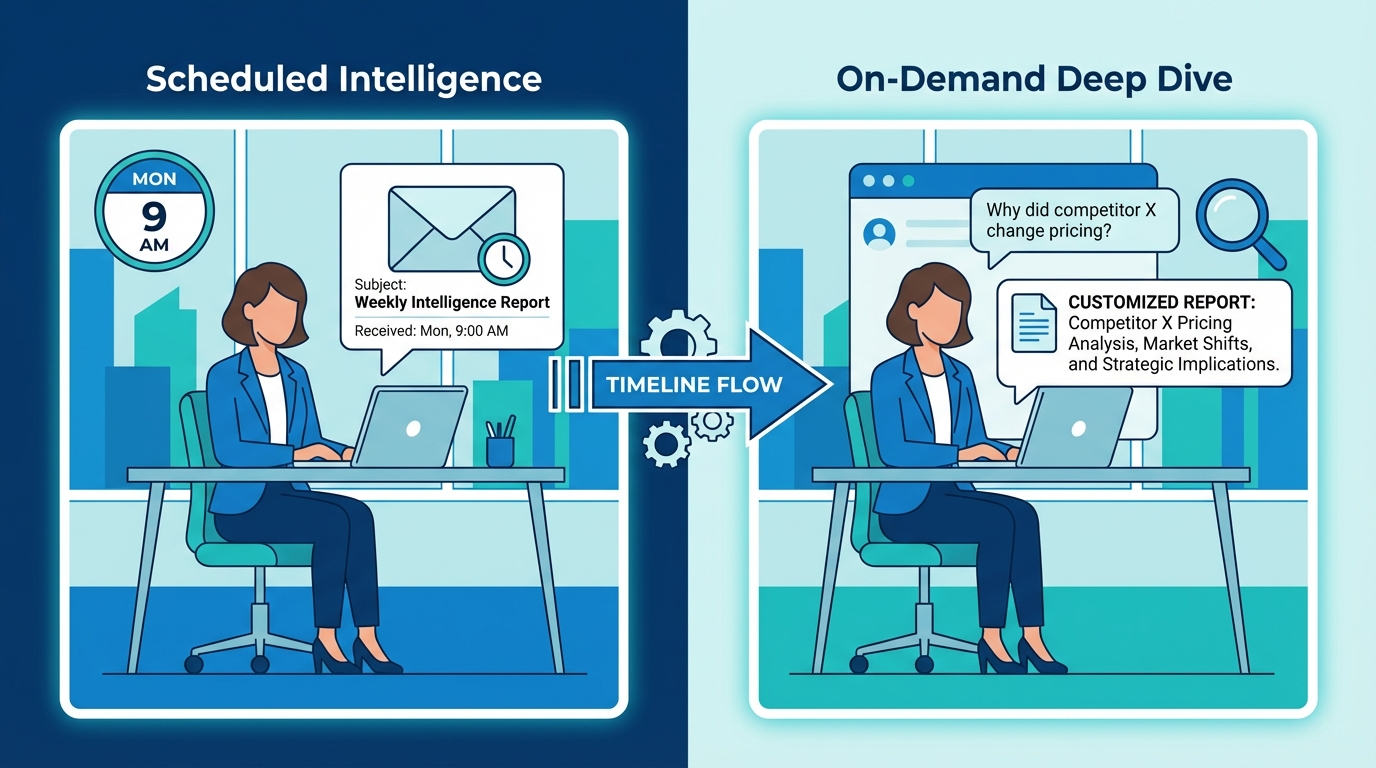
This would bridge scheduled intelligence and on-demand analysis. Your Monday morning intelligence arrives, but when something catches your attention, you can dig deeper immediately. We are exploring the technical architecture and user experience.
Broader Application
The framework is not domain-industry-specific. We are focused on domain industry because we understand these intelligence needs deeply and can validate the approach here first. But the underlying technology works for any intelligence need requiring:
- External data sources (not just internal databases)
- Frequent adaptation (questions change regularly)
- Rapid deployment (cannot wait months for development)
- Finished intelligence (not visualizations to decode)
We are having conversations with organizations in financial services, retail, and SaaS about their intelligence needs.
Final Thoughts
Intelligence as a Service represents a different approach to producing business intelligence. Rather than building tools that help humans produce intelligence, AI agents produce the intelligence directly.
We have built a working framework, validated it through extensive development testing, and we are ready to deploy with initial customers. The approach works particularly well when organizations need intelligence that requires external data sources, frequent adaptation, and cannot wait for internal development resources.
Whether this becomes a broad category or remains valuable for specific use cases will depend on how it performs across diverse applications. We are committed to developing it because it addresses real challenges we see organizations facing with traditional BI approaches.
If you are struggling to get the intelligence you need (whether due to resource constraints, data access limitations, or adaptation requirements), this might be worth exploring.
Next Steps
If you are interested in exploring how Intelligence as a Service could work for your organization, contact us at hello@iq.global
The intelligence challenges you are facing today are the intelligence applications we will build tomorrow.